When choosing Low Profile Switches For Custom Keyboard , buyers often ask one simple question first: what actually changes in feel when you go low-profile? In real use, the difference is not only "shorter." It is a mix of travel, stability, accidental press control, sound, and how fast your fingers can repeat a key without strain. From GATERON's manufacturing view, the goal is clear: keep the familiar mechanical "confidence" people like, while making the switch slimmer and more efficient for ultra-thin keyboards.
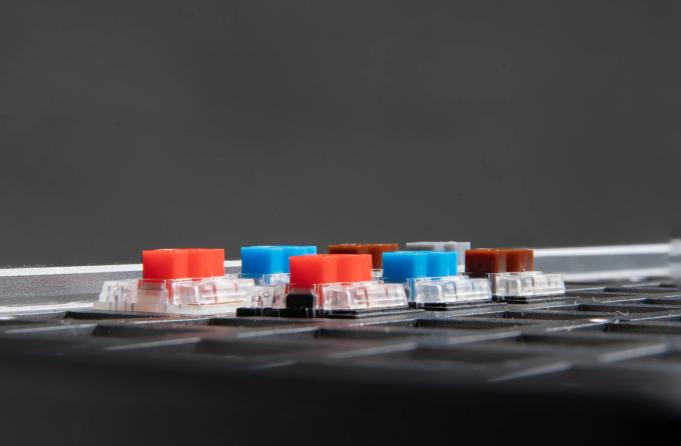
What Is Low Profile
Low profile means "shorter height / slimmer design".
In the keyboard world, low profile usually refers to low-profile mechanical switches and keyboards that are built to be thinner than standard (full-height) mechanical setups.
What "low profile" changes in practice:
- Shorter switch + keycap height → the keyboard sits lower on your desk
- Often shorter key travel (how far the key moves) → can feel faster and more compact
- Lower finger lift → can reduce fatigue for some users during long typing
- Usually designed for slim / portable / ultra-thin keyboards
- Not always cross-compatible: low-profile switches often need matching low-profile keycaps and PCBs
A simple comparison:
- Standard mechanical: taller switch, taller keycaps, more "classic" depth and sound
- Low profile: thinner switch, lower keycaps, more "laptop-like" height but still mechanical feel
What "Low Profile Feel" Really Means for Beginners
When people try a low-profile keyboard for the first time, they often describe it as "faster" or "lighter." But the feel is built from measurable parts.
You can think of a switch like a small motion system. The keycap moves, the stem guides, the spring resists, and the housing keeps everything aligned. With a low-profile switch, the overall structure is shorter, so the movement is more compact. That compactness can improve speed, but it can also create early bottom-out or a "too shallow" feeling if the design is not balanced.
For Low Profile Switches For Custom Keyboard builds, the best result is when a low-profile switch still feels "normal" in control—so beginners do not need weeks to adapt.
Meet GATERON KS-33 Low Profile 2.0: The Design Goal
GATERON KS-33 Low Profile 2.0 Mechanical Switch (White Bottom Housing) is made for ultra-thin keyboards that are designed to fit GATERON low-profile switches. One important tip for buyers: this model is not meant as a universal replacement for every low-profile keyboard. It is optimized for keyboards built around the GATERON low-profile standard, so fit and reliability stay consistent.
From a structure point of view, KS-33 uses:
✓ POM stem for smooth sliding and stable motion
✓ PC transparent top housing to support lighting clarity
✓ Nylon white bottom housing for strength and balance
✓ SMD LED support for modern PCB lighting setups
✓ Pre-lubed build to reduce scratch and improve out-of-box smoothness
✓ 3-pin design for common low-profile PCB mounting
For Low Profile Switches For Custom Keyboard users, these choices matter because they turn "specs" into daily comfort: smoother actuation, cleaner stability, and fewer surprises in long typing sessions.
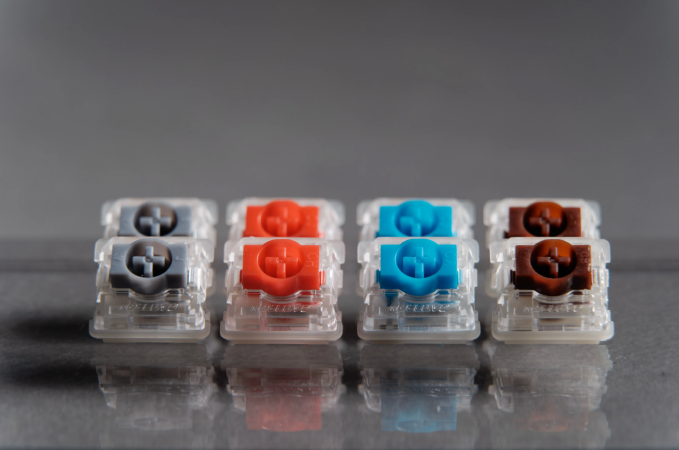
What Changes in Feel: Travel, Speed, and Mistype Control
A common myth is that low-profile always means "more accidental presses." In practice, it depends on how the travel is tuned.
KS-33 Low Profile 2.0 is designed with longer pre-travel in the low-profile format. That is useful because pre-travel is the early part of motion before actuation happens. When pre-travel is too short, beginners can trigger keys by brushing them. When it is tuned correctly, it can help reduce mistakes while still feeling fast.
In the provided set, KS-33 options include:
- Total travel: 3.2 ± 0.2 mm (a clear, usable depth for low-profile)
- Pre-travel options: 1.2 ± 0.3 mm or 1.7 ± 0.4 mm (depending on variant)
Operating force ranges:
So what does that mean for your hands? Low Profile Switches For Custom Keyboard setups can feel faster mainly because the motion is efficient, but KS-33 is tuned to keep enough "runway" before actuation so you get control, not chaos.
Why KS-33 Feels More "Normal" Than Many Low-Profile Switches
Many early low-profile switches had a common issue: users felt they were "touching bottom too early," which can make typing feel harsh and reduce comfort over time. KS-33 addresses this with small but meaningful mechanical changes.
GATERON's structure adjustments include:
✓ Side pole fix location shortened by 0.3 cm
✓ Middle pole extended by 0.3 cm
✓ Resolved the early bottom-out touch issue seen in older structures
These details sound technical, but the benefit is practical: the keypress feels more controlled across the stroke, and bottom-out feels less sudden. For beginners building Low Profile Switches For Custom Keyboard projects, this "more normal switch type feeling in low profile size" is the difference between enjoying the keyboard and constantly noticing the switch.
Another helpful comparison: KS-33 is 12.2 mm in height, while KS-27 is 11.75 mm. That small difference can be meaningful in how the internal poles and travel dynamics are arranged, which is why the switch is matched to specific keyboard designs.
Choosing Linear, Tactile, or Clicky: What You'll Notice First
If you are new to mechanical switches, the easiest way to choose is to match the feel to your daily habit, not just trends.
Linear (50 ± 15 gf) tends to feel smooth and clean. It is popular for gaming and fast typing because there is no bump. If you want low noise and fast repeats, linear is a safe start for Low Profile Switches For Custom Keyboard builds.
Tactile (55 ± 15 gf) adds a gentle feedback point so you can feel actuation. Many beginners like tactile because it helps reduce over-pressing and improves confidence when typing.
Clicky (65 ± 15 gf) adds sound and a sharper feedback style. It can feel satisfying, but it is louder and usually better for private rooms than shared offices.
No matter which type you choose, KS-33 keeps the same 3.2 ± 0.2 mm total travel, so your overall depth stays consistent while the feedback style changes.
Practical Buying Tips and a Clear CTA From GATERON
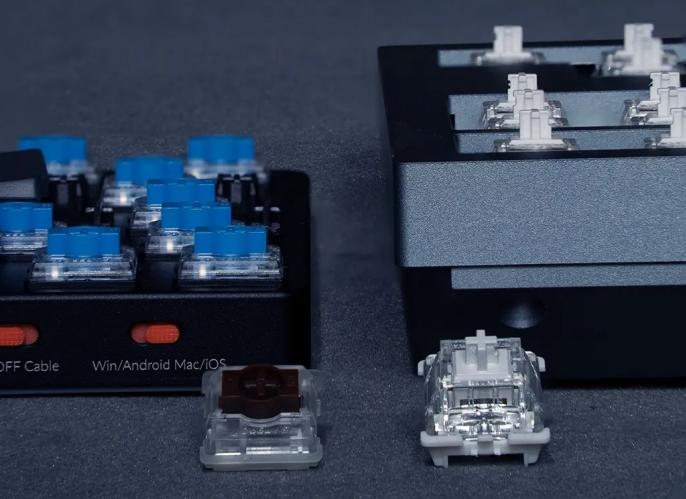
Because low-profile designs are more system-dependent, the most important beginner rule is compatibility. KS-33 is built for keyboards that fit GATERON low-profile switches, not as a universal swap into every low-profile board. Treat this like a "matched platform" choice: you get better stability, a cleaner feel, and a more reliable installation when your keyboard is designed for the same standard.
If you are planning a Low Profile Switches For Custom Keyboard build for 2026—whether for gaming speed, portable productivity, or a slimmer desk setup—GATERON KS-33 Low Profile 2.0 is designed to deliver a familiar mechanical feel in a low-profile size, with smoother motion and fewer accidental keystrokes.
CTA: Get a proven match. Send GATERON your keyboard model, PCB type, and target feel. We'll verify KS-33 fit and guide you to the right linear/tactile/clicky configuration.



