Silent Mechanical Low Profile Keyboard Switch performance in 2026 is no longer defined only by "quiet." It is defined by how quietly a switch can perform without losing speed, feel, or stability. For beginners, the word "silent" can be confusing because it sounds absolute—like the keyboard will make no sound at all. In reality, a Silent Mechanical Low Profile Keyboard Switch is designed to reduce the most noticeable noises (bottom-out and return noise), while keeping typing responsive and consistent.
What "Silent" Really Means in 2026 Keyboards
A Silent Mechanical Low Profile Keyboard Switch is not magic. It does not remove every sound in your setup. What it does is reduce the sharp "clack" you hear when the stem hits the housing during a keystroke. That matters most in shared spaces: open offices, late-night work, streaming, or study rooms.
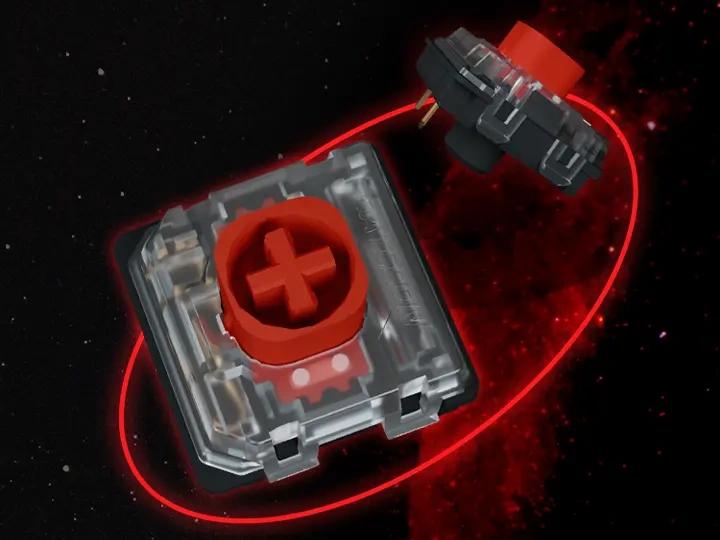
In 2026, buyers also expect silent switches to stay fast and stable—especially on compact, low-profile keyboards that travel with you. That is why many users now evaluate "silent" with three questions:
✓ Does it reduce impact noise in real typing speed?
✓ Does it keep the key feel clean, not mushy?
✓ Does it stay stable with less wobble on thinner keyboards?
At GATERON, we design silent switches to answer those three questions as clearly as possible.
Why Low-Profile Silent Switches Are Growing Faster
Low-profile keyboards are no longer a niche. People move between home and office, or between laptop and desktop, and they want a keyboard that is portable, thin, and quick to trigger. That demand is pushing the market toward low-profile Silent Mechanical Low Profile Keyboard Switch designs that feel familiar, but move faster.
A low-profile switch has a shorter travel path. That reduces the time between pressing a key and sending a signal. In practice, it can make typing feel more direct, and it can help reduce finger fatigue for users who type all day—because the keystroke does not require as much motion.
The key is engineering. Short travel can feel great, or it can feel unstable if the stem wobbles. A modern silent switch must balance compact structure with solid guidance.
GATERON KS-33 Low Profile Silent 2.0: Quiet, Fast, and Compact
GATERON KS-33 Low Profile Silent 2.0 is built for GATERON low-profile switch-compatible keyboards. It is not intended as a universal replacement for every low-profile design, because low-profile standards vary across brands and keyboard plates.
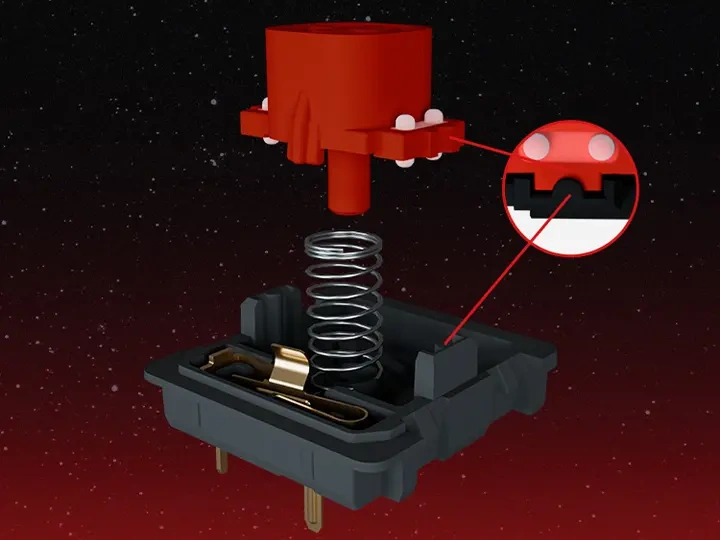
- Quick Actuation by Design
With 1.7 mm pre-travel in a 3.0 mm total throw, KS-33 gives a faster response while reducing unnecessary travel. On compact layouts, that quicker response can make the keyboard feel more efficient in daily work.
- Pre-Lubed Internal Structure For Smoother Typing
Pre-lube is not a "luxury detail." It reduces friction points inside the switch. For customers, that means a smoother press out of the box, fewer scratchy sensations, and more consistent feel across keys—especially useful for first-time builders.
- Materials Chosen For Consistency And Durability
KS-33 uses a POM stem, a transparent PC top housing, and a black nylon bottom housing. For users, the practical value is stable movement, reliable structure, and a clean lighting window for modern keyboards.
- SMD LED Support For Clean Backlighting
The transparent top housing supports SMD LEDs, so lighting remains bright and even. This matters for compact keyboards where lighting is part of the experience, not a "gaming-only" feature.
How to Choose Linear Vs Tactile in a Silent Mechanical Low Profile Keyboard Switch
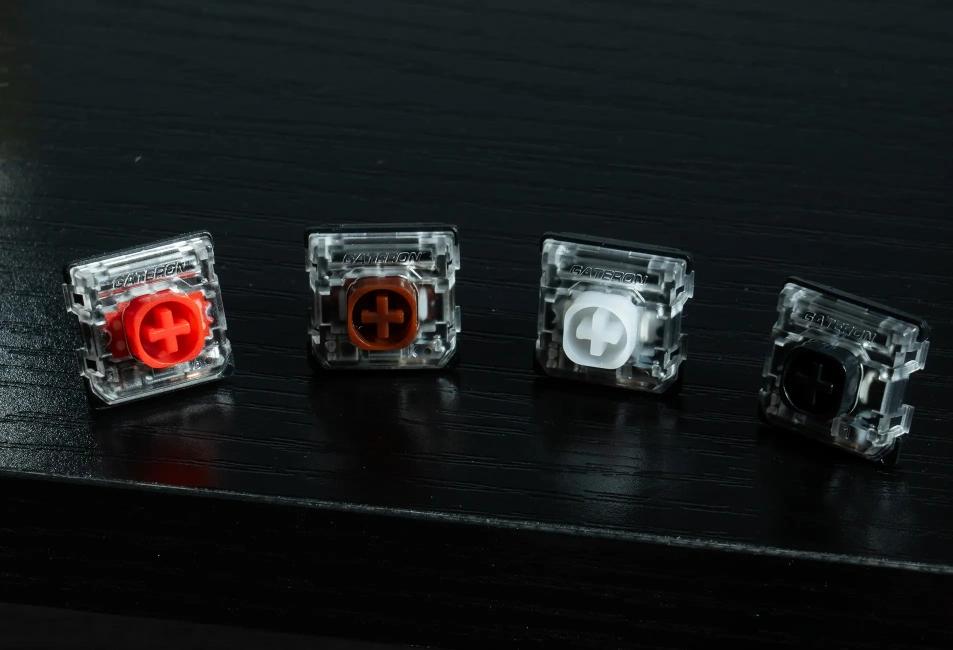
Many beginners assume silent switches must feel soft or dull. That is not true. Silent design is about noise control, while linear vs tactile is about feedback.
With KS-33 Low Profile Silent 2.0, you can choose:
- Linear: Smooth And Predictable
Linear options are designed for a clean press with no bump. They are popular for users who want a steady rhythm.
✓ Promotes stable, repeatable keystrokes
✓ Reduced fatigue with smooth travel
✓ Quiet-friendly for roommates and shared offices
Linear numbers: 45±15 gf operating force, 1.7 mm pre, 3.0±0.2 mm total travel—balanced feel.
- Tactile: Clear Feedback Without Loud Click
Tactile switches add a bump that tells your finger "the key has actuated." You get guidance without needing extra sound.
✓ Helps reduce accidental presses
✓ Feels more controlled for office writing
✓ Useful for beginners who want feedback when learning mechanical feel
The tactile option is listed at 55±15 gf operating force, still keeping the short travel design for responsiveness.
The Quietest Switch Still Needs Stability: Why Wobble Matters
Noise is not only about the sound of impact. In real use, stem wobble can create extra vibration, uneven key feel, and a less premium experience—especially on low-profile keyboards where the structure is slimmer.
KS-33 takes stability seriously. The switch structure is designed to reduce stem wobble, described as being similar to a dual-rail guidance concept, which helps keep the press more centered. For customers, this translates to practical value:
✓ More consistent feel across the keyboard
✓ Less "shaky" key motion on thin boards
✓ Cleaner typing sound because the press is more controlled
This is also why pin configuration matters. KS-33 is offered as a 3-pin design, which many customers prefer for compatible low-profile builds where plate and PCB design are already optimized for stable fit.
A Simple Buying Checklist and a Clear Next Step
If you are selecting a Silent Mechanical Low Profile Keyboard Switch in 2026, focus on a few practical checkpoints rather than marketing words:
✓ Confirm your keyboard supports GATERON low-profile switches (compatibility first)
✓ Decide your feel target: Linear for smooth rhythm, Tactile for guided feedback
✓ Look for real travel numbers like 1.7 mm pre-travel and 3.0 mm total travel
✓ Prioritize smoothness and stability: pre-lubed + reduced wobble structure
✓ If you use backlighting, confirm SMD LED support and transparent housing design
If your goal is a quieter, faster, ultra-portable typing setup, GATERON KS-33 Low Profile Silent 2.0 is built for that direction. Reach out to GATERON to request the KS-33 Low Profile Silent 2.0 switch set, confirm compatibility with your keyboard model, and get a recommendation on the best force option for your typing style.



