Standard Mechanical Keyboard Switches are no longer limited to a small enthusiast market. In 2026, they have become a practical upgrade for offices, studios, gaming rooms, and professional workstations. From the standpoint of a manufacturer, the direction of this shift is clear. Buyers increasingly demand better key feel, longer-lasting performance, more accurate input response, and richer product selection. Rubber dome keyboards still serve budget-oriented categories, but they often face limitations in consistency and engineering detail when compared with modern performance expectations.
Why This Comparison Matters More in 2026
The comparison between mechanical and rubber dome keyboards is no longer only about preference. The focus has shifted toward productivity, durability, and stronger brand positioning. They work across home offices, shared workplaces, and portable desk setups. In these environments, the keyboard is not a minor accessory. It is a daily interface.
Rubber dome keyboards remain common because they are familiar and inexpensive. However, their structure depends on a compressible rubber layer that usually produces a softer and less defined key response. By contrast, mechanical keyboards use individual switch mechanisms under each key. Logitech's description of keyboard structure helps clarify the central difference between these two formats. Mechanical keyboards feature spring-loaded switches, whereas standard keyboards use rubber domes. That variation in internal design shapes the typing experience, response accuracy, and product longevity.
For clients evaluating product direction in 2026, the important question is not whether rubber dome keyboards still exist. The real question is whether they still represent the best long-term value for users who care about performance.
How Standard Mechanical Keyboard Switches Create a Better Typing Experience
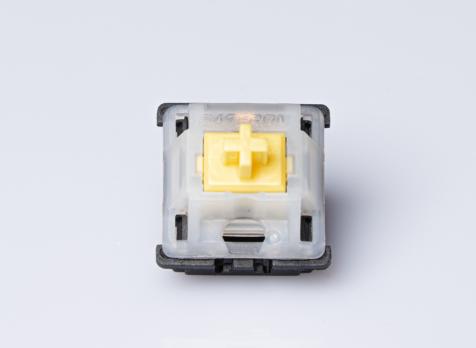
The strength of Standard Mechanical Keyboard Switches begins with controlled movement. Each key is built around an independent switch structure. This allows the force curve, travel distance, rebound, and sound profile to be engineered with far greater accuracy than a rubber dome sheet can usually provide.
That difference becomes visible in everyday use. Mechanical switches provide more distinct actuation feedback, steadier return, and more consistent key travel across the keyboard. This matters for professionals who type for long hours, gamers who rely on fast repeated input, and brands that want their products to feel more refined.
At GATERON, this is where switch engineering becomes meaningful. A switch is not only a component under a keycap. It is the foundation of the entire input experience.
✓ Clearer and more repeatable keystrokes
✓ Better separation between linear, tactile, and clicky feel
✓ More stable performance across long-term use
✓ Greater room for product segmentation and user customization
These advantages explain why Standard Mechanical Keyboard Switches continue to outperform rubber dome designs in the premium and mid-range market.
Durability and Consistency Are Now Purchasing Priorities
In earlier years, many buyers accepted rubber dome keyboards as disposable tools. That purchasing logic is changing. More users now want a keyboard that keeps a consistent feel over time. Once buyers experience uneven key pressure, softened rebound, or degraded dome response, they begin to understand the limitations of lower-cost structures.
Mechanical platforms answer this concern more effectively because each switch is designed as an individual mechanism rather than part of a single rubber layer. That is one reason the category continues to gain ground. Grand View Research points to ongoing growth in the gaming keyboard market, suggesting that keyboards are increasingly being seen as higher-value input hardware rather than as simple items to replace when needed.
For clients, this translates directly to commercial value. A better switch system supports stronger product positioning, better user retention, and clearer differentiation in a crowded market.
What GATERON Products Show About the Modern Mechanical Standard
From GATERON's standpoint, the value of Standard Mechanical Keyboard Switches is best understood through product details rather than abstract claims. The G Pro 3.0 Switch Set features upgraded pins for smoother hot-swap use. GATERON also states that its G Pro switch designs use pre-lubed construction and oxidation-resistant gold contacts to support smoother actuation and long-term durability.
This product logic matters because 2026 buyers are more informed. They no longer compare keyboards only by appearance or price. They want to know how the switch is built, how stable the insertion process is, whether the stroke feels consistent, and whether the product supports customization.
A Practical Example of Product Segmentation
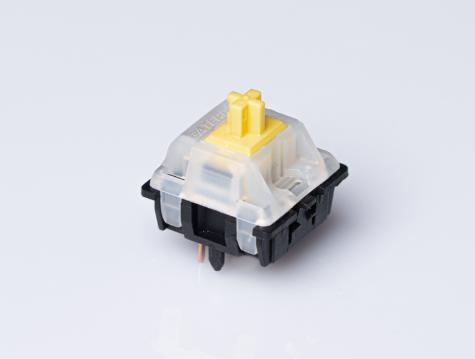
GATERON's official listings also show how different switch lines support different user needs. For example:
✓ G Pro 3.0 focuses on smoother hot-swap handling and general-use refinement
✓ Goldenrod Pro 3.0 is listed with a POM stem, PC top housing, nylon bottom housing, stainless steel spring, and pre-lubed structure
✓ KS-3X47 Pro Switch Set is presented as a 5-pin pre-lubed option for users who want a more stable custom build base
This is where mechanical switches clearly move beyond the rubber dome model. Instead of one general feel for every buyer, the product family can be segmented by structure, pin layout, housing material, and application scenario.
Why Rubber Dome Still Exists But No Longer Leads
Rubber dome keyboards still have a place in entry-level purchasing. They are widely available, simple to deploy, and often attractive for low-budget procurement. Yet in categories where typing quality, switch identity, and product value matter, they are no longer the leading answer.
The reason is straightforward. Rubber dome designs are difficult to refine with the same level of precision. Their feel is often described as softer, less defined, and less stable over time. For a basic office replacement, that may be acceptable. For modern work, gaming, development, content creation, and custom keyboard programs, it is usually not enough.
This is why more brands, distributors, and end users are moving toward mechanical solutions. They want a keyboard that feels intentional, not generic.
Choosing the Right Direction in 2026
For clients entering or expanding in the keyboard category, Standard Mechanical Keyboard Switches represent a stronger long-term platform than rubber dome alternatives. They help with better typing quality, clearer market segmentation, and stronger brand stories. They also fit with how the market is changing: people want better performance, longer service life, and more information when they buy things.
We at GATERON think this change is more than just a trend. It shows that the industry has higher standards. With growing attention on the quality of every keystroke, high-performing switch design can strengthen a product line's position in the marketplace.
Brands that aim to plan effectively for 2026 can use GATERON mechanical switch solutions as a solid base for office keyboards, gaming hardware, and custom input projects. With the support of official product documentation and market research, buyers can assess switch architecture, category strategy, and expected demand more systematically.
Read More
An effective introduction can start with GATERON's official switch pages, together with industry research from Mordor Intelligence, Grand View Research, and Logitech's keyboard guide. These references help buyers learn more about switch construction, performance logic, and current market trends.



