Silent Mechanical Switches have become one of the most discussed topics in modern keyboard design because users now care not only about speed and precision, but also about sound control, comfort, and long-session usability.
From GATERON's perspective as a switch manufacturer, the better feel does not come from one universal answer. It comes from matching the switch structure to the user's environment, finger force, and typing goal. In practice, silent and normal switches meet different expectations, and the difference in feel is more meaningful than many buyers first assume.
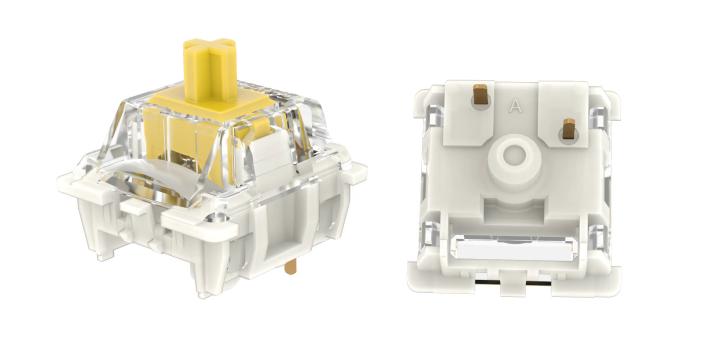
GATERON's official silent switch line is designed with cushioned pads on both the top and bottom of the stem to reduce noise, while still keeping the essential character of mechanical actuation.
Why This Comparison Matters More in 2026
Mechanical keyboards have developed into a broader consumer category rather than a specialized enthusiast market. Mordor Intelligence forecasts that the sector will reach USD 2.66 billion in 2026 and grow to USD 3.43 billion by 2031, supported by rising interest from office staff, remote professionals, developers, and mainstream buyers.
At the same time, workplace acoustics continue to influence product selection in real-world use. Interface's acoustics report notes that office noise affects concentration, stress, and perceived productivity for many workers. That background helps explain why Silent Mechanical Switches are gaining more attention in professional and mixed-use settings.
For buyers, this means the old question of "Which switch is best?" is no longer precise enough. A better question is: which switch feels better in the place where it will actually be used?
A keyboard that feels excellent in a private gaming room may feel too sharp and loud in a shared office, library, studio, or late-night home setup. This is exactly why switch selection has become a product-planning issue rather than a simple preference checkbox.
What Silent Mechanical Switches Change in Real Use
At the structural level, Silent Mechanical Switches are not simply normal switches with reduced volume. GATERON's silent switches use a cushioned muffler pad on the top and bottom of the stem to reduce noise during keystrokes. The result is a softer impact profile at both downstroke and return. GATERON also positions this switch family for sound-sensitive spaces and for users who do not want to disturb others at night.
That design changes feel in several important ways:
✓ The bottom-out sensation is softer and less sharp.
✓ The return stroke is less noisy and less crisp.
✓ The overall typing impression is more controlled and restrained.
✓ Finger fatigue may feel lower for users who type with heavier impact.
This is why many users describe Silent Mechanical Switches as "smoother" or "gentler," while others describe them as slightly less lively. Both reactions are valid. Silence is not only an acoustic change. It is also a tactile change, because part of what people perceive as feel comes from impact feedback, resonance, and the rhythm of the return stroke.
How Normal Mechanical Switches Still Win on Feedback
Normal mechanical switches remain highly relevant because many users prefer a more open and direct key response. Without dampening elements, the switch can preserve a cleaner bottom-out signature and a more explicit sense of travel. That often makes normal switches feel more energetic, more defined, and more expressive.
From a product standpoint, this matters in three user groups.
- Competitive gamers often want fast recognition of repeated inputs.
- Enthusiasts often value a distinct sound profile as part of the keyboard experience.
- Content creators and developers may also prefer the clearer physical confirmation that a standard linear or tactile switch can provide.
At GATERON, this broader feel spectrum is reflected across different families. For example, the G Pro 3.0 series emphasizes improved pin durability for hot-swap use, while products such as Milky Pro switches are described as lightly pre-lubed for a smoother and more natural typing experience. In other words, "normal" no longer means basic. It can still be highly refined, smooth, stable, and premium without being silent.
A Practical Look at GATERON Switch Options
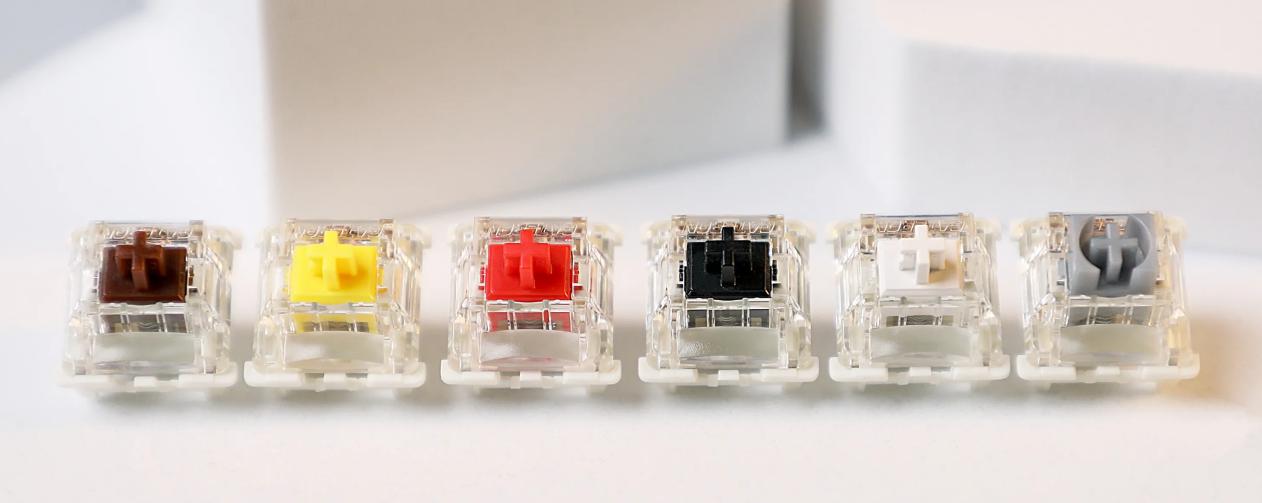
One useful way to understand this comparison is to look at actual switch data. GATERON's official silent switch offering includes both linear and tactile options, and the product line is available in colors such as black, red, brown, white, and yellow. We also notes that the silent switches are 5-pin PCB mount designs, which gives builders more flexibility in compatible projects.
The feel difference becomes clearer when force and travel are considered. The Silent Red switch has a 45±15 gf operating force, while Silent Black is rated at 60±15 gf. The silent switch also show 4.0 mm total travel, 2.0±0.6 mm operating position/output, and 50 million cycles of operating life. These are meaningful figures because they show that Silent Mechanical Switches are not niche novelty parts. They are engineered as full mechanical products with mainstream travel and durability expectations.
For buyers comparing feel:
✓ Choose a lighter silent option when you want easier key travel and lower acoustic presence.
✓ Choose a heavier silent option when you want more resistance and firmer control.
✓ Choose a normal tactile or linear switch when you want clearer impact character and less damped response.
Which Feel Better for Different Users
From GATERON's perspective, the better-feeling switch depends on the use case rather than on a fixed ranking.
For office and shared environments, Silent Mechanical Switches often feel better because they remove unnecessary disturbance without giving up mechanical identity. The softer landing can make long documents, coding sessions, and repeated daily input feel more composed. In this environment, quieter operation communicates not only consideration for nearby users, but also a more refined overall feel.
At the same time, for custom enthusiast builds and users who enjoy a more pronounced typing character, normal mechanical switches often feel preferable because they provide fuller acoustic feedback and a more clearly defined actuation point. Many users enjoy that open feedback loop. It can make the board feel more vivid and more distinctive.
For hybrid users, the decision is more nuanced. A person who works in silence during the day and games at night may prefer a silent linear. Another user may prefer a normal tactile switch for stronger positional feedback. The key point is that feel is not only about softness or smoothness. It is about whether the switch behavior fits the user's actual rhythm.
The Better Choice Starts With the Right Application
The most useful conclusion is simple: Silent Mechanical Switches usually feel better when the goal is controlled sound, softer impact, and everyday usability, while normal mechanical switches usually feel better when the goal is sharper feedback, stronger acoustic character, and a more traditional mechanical signature. Neither category replaces the other. They solve different problems.
At GATERON, we believe switch selection should begin with application, not assumption. Buyers planning OEM keyboards, custom kits, office boards, or enthusiast products should compare not only switch type, but also force curve, mounting style, noise target, and long-session comfort. That approach leads to better product matching and a stronger user experience.
If your team is evaluating Silent Mechanical Switches for a new keyboard project, GATERON's official silent series and broader switch portfolio provide a practical starting point for testing, product planning, and differentiated keyboard design. Explore the official GATERON silent switch resources and datasheets before finalizing your next build strategy.



