A Quiet Tactile Keyboard Switch offers noticeable feedback with quiet operation—a fast-growing segment of the mechanical keyboard market (projected to reach $2.04 billion in 2026, 13.0% CAGR). More users want responsive switches without disruptive noise. But how do these switches actually work? Does silence ruin the typing feel? And which models should beginners try? This article answers those questions in a straightforward way.
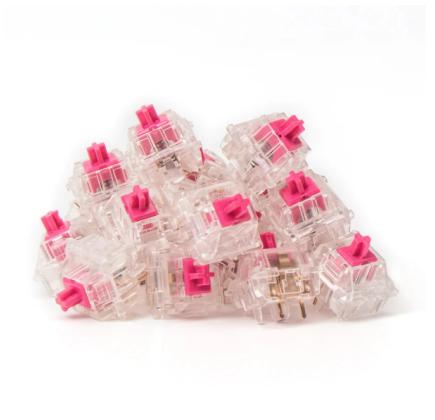
Understanding the Noise Sources in a Mechanical Switch
To understand why Quiet Tactile Keyboard Switches are different from regular ones, you first need to know where the noise in a typical mechanical switch comes from.
Most mechanical switch noise comes from two contact points:
- Bottom-out sound: the impact when the stem hits the bottom housing at the end of a keypress
- Top-out sound: the impact when the stem returns and taps the top housing after release
A standard tactile or clicky switch produces both of these sounds without any modification. That is why an open office full of mechanical keyboards can sound like a room full of typewriters. Quiet Tactile Keyboard Switches are engineered to soften these exact contact points and control vibration throughout the travel.
How Does a Quiet Tactile Switch Achieve Silence?
The technology behind Quiet Tactile Keyboard Switches is both simple and clever. We prefer smart design and materials to advanced electronics for noise reduction.
We implement design features targeting noise reduction without impact feel.
- Mute pads: Soft padding molds located at the bottom/top of the stem.
- Dual-rail construction: Guides that hold the stem and eliminate sideways rattling.
- Factory lubrication: Diminishes noise caused by friction and vibrations of moving parts.
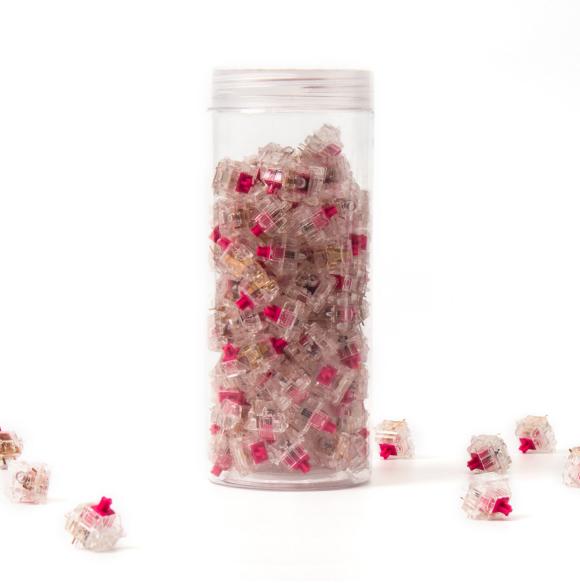
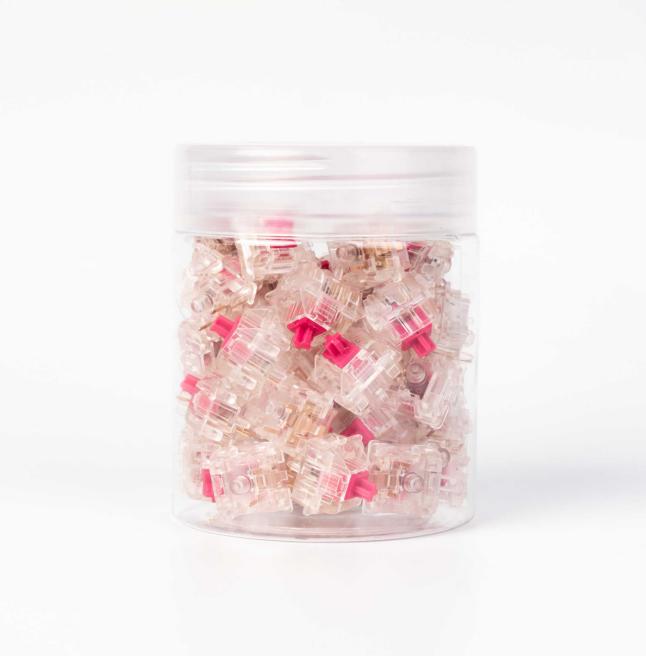
A good example of this is the Gateron KS-6 Aliaz Silent Tactile Switch, which provides an even better keystroke due to its clear PC housing and the use of a smooth and silent pink POM stem.
The cushioning mute pads placed on the bottom and top of the stem provide a significant sound reduction with the utmost travel of the stem. With a design like this, the switch can be silent and still improve the user experience without feeling mushy or unresponsive.
The Feel Factor: Why Tactile Feedback Still Matters
One of the first questions new users ask is: if the switch is quiet, can I still feel when the key has been actuated? The short answer is yes. The "tactile" part of the name is not a marketing phrase—it refers to a physical bump in the switch's travel path.
How tactile feedback helps your typing:
- It tells your fingers exactly when the keypress has been registered
- It reduces the need to bottom out the key completely, which further lowers the noise
- It provides rhythm and confidence, especially during long writing or coding sessions
A helpful way to think about it is: tactile feedback tells your fingers "the key has actuated," while noise reduction keeps that moment from becoming a sharp "clack" that travels across the room. Switches like these are ideal for long-form writing and programming, and any evening tasks that require a switch with a little more responsiveness and control.
Specifying Real-World Use Cases
What will you see when you go to a product page for Quiet Tactile Keyboard Switches? Lists of technical specifications. These numbers give you insight into how the switch will really feel under your fingers.
Some key specifications to note include:
- Pre-travel: This is the distance (in mm) a user must travel before actuation occurs. The bigger the pre-travel, the more distance a user must travel before that key registers.
- Total travel: This is the max distance the switch can travel. The classic MX-style switches have a maximum total travel of 4.0 mm, which is a familiar typing depth.
- Operation force: This is the amount of pressure (in grams) that must be used to press the switch. The lower the operation force, the easier the spring (for example, 45-60g). The higher the operation force, the stiffer the spring (for example, 70g) and accidental presses are reduced.
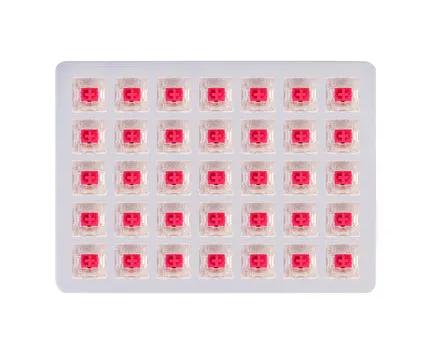
The Gateron KS-6 Aliaz Silent Tactile Switch, for example, has a pre-travel of 2.0 ± 0.6 mm, a total travel of 4.0 mm max, and operation force options ranging from 60g to 100g. This offers a user a quick keystroke for a quick typing response or a heavier key for more deliberate keystrokes.
Why Are Quiet Tactile Switches Increasing in Demand?
The modern rise of Quiet Tactile Keyboard Switches is a new, captivating result of a new and modern age of work and lifestyle.
Factors contributing to increased needs:
- Open concept offices: Workers complain about unwanted noise with people working on their keyboards, which disrupts people and stymies office productivity.
- Remote and hybrid work: A lot of people nowadays work in close proximity to their family and/or roommates.
- Working at nonstandard hours: Students doing late-night study, working in a dorm, and software developers working to meet a tight deadline.
- Audio-sensitive work: Activities involving voice and video content creation done in a close setting to recording devices.
Noise from keyboards in the workplace is a major source of irritation for people employed in open office spaces, where there are little to no barriers, and that can stymie a working environment that is focused and productive.
The use of Quiet Tactile Keyboard Switches can address this challenge, as they have the benefits of a mechanical keyboard for productivity, with the drawbacks of noise.
Gateron's Contribution to the Silent Switch Market
The discussion around Quiet Tactile Keyboard Switches from a global perspective would be deficient if it did not address the role of Gateron. They are a 16-year manufacturer of switches, and their specialization has enabled significant advances in things like precise mold design and fabrication, processing of materials by injection molding and the formation of complete systems by automated assembly. This automated assembly and processing is crucial to the quality achieved in a Quiet Switch, given that the manufacture of such switches requires a high standard of precision.
Gateron does have some proprietary technology in its manufacturing:
- Molds for the switches have tight tolerances due to the machines that make them being highly precise. The mold is made in-house to keep strict quality control.
- Not only does Gateron have automation for their lubrication and assembly, but the machines are also programmed to do the same tasks the same way every time. This drastically reduces any potential human error.
- Gateron puts each production run of their switches to the test for the same actuation and durability tests.
A Gateron factory tour will disclose all of the aforementioned steps. Making a switch starts with some precision mold making and CNC machining. Injection molding comes next, with Automated assembly lines performing the final assembly with a quality assurance check. Each Gateron quiet tactile switch is made to be consistent.
Which Quiet Tactile Switch Would be a Good Fit for You?
For those who have decided to use quiet tactile keyboard switches, there are some options to consider. Not all silent tactile switches will feel the same.
Questions to ask before you buy:
- Do you prefer a lighter or heavier actuation force? Lighter springs reduce finger fatigue over long sessions; heavier springs provide more intentional feedback
- Is RGB lighting important to you? Look for switches with transparent housings that allow light to pass through
- Are you comfortable with soldering, or do you need a hot-swappable design? Most modern switch sets use a 5-pin PCB-mount design that works with hot-swap keyboards without soldering
Gateron offers several lines of Quiet Tactile Keyboard Switches. The Aliaz series is a solid entry point, available in multiple spring weights to accommodate different typing preferences.
Debuting in 2026, the Grape Smoothie Silent Tactile switches are a 63g bottom-out force switch. They utilize a 2-stage spring system, which results in a muted sound with a strong force bottom-out. These switches allow full configurability and are designed to keep the user in mind.
Applications and Use Cases
Quiet Tactile Keyboard Switches are attractive to a broad audience.
Quiet tactile switches can be found in:
- Corporate and enterprise environments: Quiet boards can be standardized in IT departments and will not reduce the quality of the boards.
- Home offices: With minimal distraction, family members can be engaged in video calls and remain undisturbed while working.
- Co-working spaces and libraries: shared resource and quiet zones.
- Educational settings: the labs and classrooms usually have high levels of typing activity.
Environments where noise is a distraction improve productivity with these switches. Noise becomes the new norm, causing alterations to office environments.
A Final Word On Starting Your Silent Journey
Moving from a membrane or loud mechanical board to Quiet Tactile Keyboard Switches involves no compromise. You get mechanical durability, tactile feedback, and a quiet profile that won't disturb others. For beginners, a quiet tactile switch is an excellent starting point—satisfying feel without social friction.
With many models available, finding your match is easy. The best way to understand the difference? Try one yourself. A single switch in a tester or a full set on a hot-swappable keyboard tells you more than any spec sheet. Once you experience feel plus silence, you may never go back.
Frequently Asked Questions: Quick Answers About Quiet Tactile Keyboard Switches
Q: Is a quiet tactile switch a silent switch?
A: No. Quiet tactile switches do make noise, but they dampen the sound. Noise in a quiet tactile switch is softer than that of usual mechanical switches. We are aiming towards even the dullest sound being far. We are targeting the removal of all the clicks and clacks.
Q: Are quiet tactile switches mushy?
A: A good, quiet tactile switch shouldn't feel mushy. Gateron's Aliaz or Grape Smoothie are Quiet Tactile Switches and have cushions that make the switches softer.
Q: Do quiet tactile switches require a particular keyboard?
A: Most of them are MX-style, 5-pin PCB-mount, and can be integrated into hot-swappable keyboards and most standard PCBs.
Q: What spring weight do I need?
A: For Light/Fast typing, go for 45-60 grams; for Heavy/Slow typing, go for 70g+. The most common spring weight is 60-65 grams.
Q: Are these compatible with RGB?
A: Yes, the switch has to have a case that is transparent or translucent. Gateron has a lot of these RGB-compatible silent tactile switches.



