A mechanical keyboard has evolved into an aesthetic rather than just an input device. The effects, feel, and sound of each keystroke allows for a distinct and customized experience.

The Normal Profile Keyboard Switch Pack caters to this customizability. From design to materials, everything plays a role in sound and smoothness of keystrokes.
In this regard, this article will use the GATERON KS-3X1 Milky Yellow Red Pro Switch Set to show the effects of design on lighting, acoustics, and the effects of material on typing cushioning.
What Is a Normal Profile Keyboard?
A normal profile mechanical keyboard is made up of standard-height MX-style switches with a total travel distance of around 4.0 mm, and is paired with standard-height keycaps. The more typical design of a normal profile keyboard allows for more room for the components of an acoustic and a more custom keycap interaction.
The design of a switch affects a keyboard's light performance and acoustics.
Lighting Performance
Lighting performance is affected by how the switch housing is designed around the LED area of the keyboard. When the housing is made of a clear material, lighting tends to be more focused, whereas a housing made with a more diffuse material will provide a more evenly spread light across the surface.
Sound Characteristics
The switch housing, stem material, spring, and lubrication all contribute to the final typing sound. Together with the keyboard plate, PCB, case, and keycaps, they determine whether the keyboard produces a sharper or deeper acoustic profile.
A Normal Profile Keyboard Switch Pack allows users to adjust these characteristics without replacing the entire keyboard.
How Switch Materials Affect Light and Sound
Diffusion of RGB Lights with Milky Housing
The KS-3X1 Milky Pro series uses milky nylon housing to diffuse RGB lights more evenly.
Fully transparent housings tend to create concentrated LED hotspots. The milky nylon housing creates:
- Softer lighting: Results in an even smoother RGB display throughout the keyboard.
- Better color integration: RGB effects, particularly for gradients, display more organized and less chaotic effects.
Users will notice a slight reduction in the lighting intensity, but this housing creates a milky diffusion effect that many people prefer for their custom desk setups.
Balanced Sound with POM Stem and Nylon Housing
The sound that a switch creates is a function of many of its components working together.
The KS-3X1 Milky Pro uses:
Polyoxymethylene (POM) is a common material in the construction of switches due to its low-friction characteristic. It allows for a keyboard to have a smooth travel and a sharp bottoming out.
Nylon is a favorite material in the construction of housings due to its durability and useful acoustics. Nylon tends to create a warm sound, unlike many of the more rigid housings that are used.
Lubrication is used in switches to create a smoother interaction between parts and to lessen the noise that is caused by the spring and contact.
The sound a switch creates is a function of many components working together in addition to the acoustics of the keyboard itself, such as the material the keyboard is constructed with, the mounting style, the housing and the keycaps.
Engineering Aspects of the KS-3X1 Design
In addition to sound and appearance, switch reliability includes control of the materials used and precision of the manufacturing process.
Several unique design elements exist in the KS-3X1 series.
1. Gold Alloy Contacts
Gold alloy is used in the electrical contacts to decrease the likelihood of oxidation and allow better performance of the contacts after many operations.
2. Reinforced Metal Pins
The switch pins are designed with enhanced structural strength to improve connection reliability with the PCB.
3. Improved Stem Stability
Housing and guide design help reduce the excessive movement of the stem and provide a more consistent key feel and cleaner sound.
These choices of designs and engineering reflect a high level of reliability and consistency in the manufacturing process of mechanical switches.
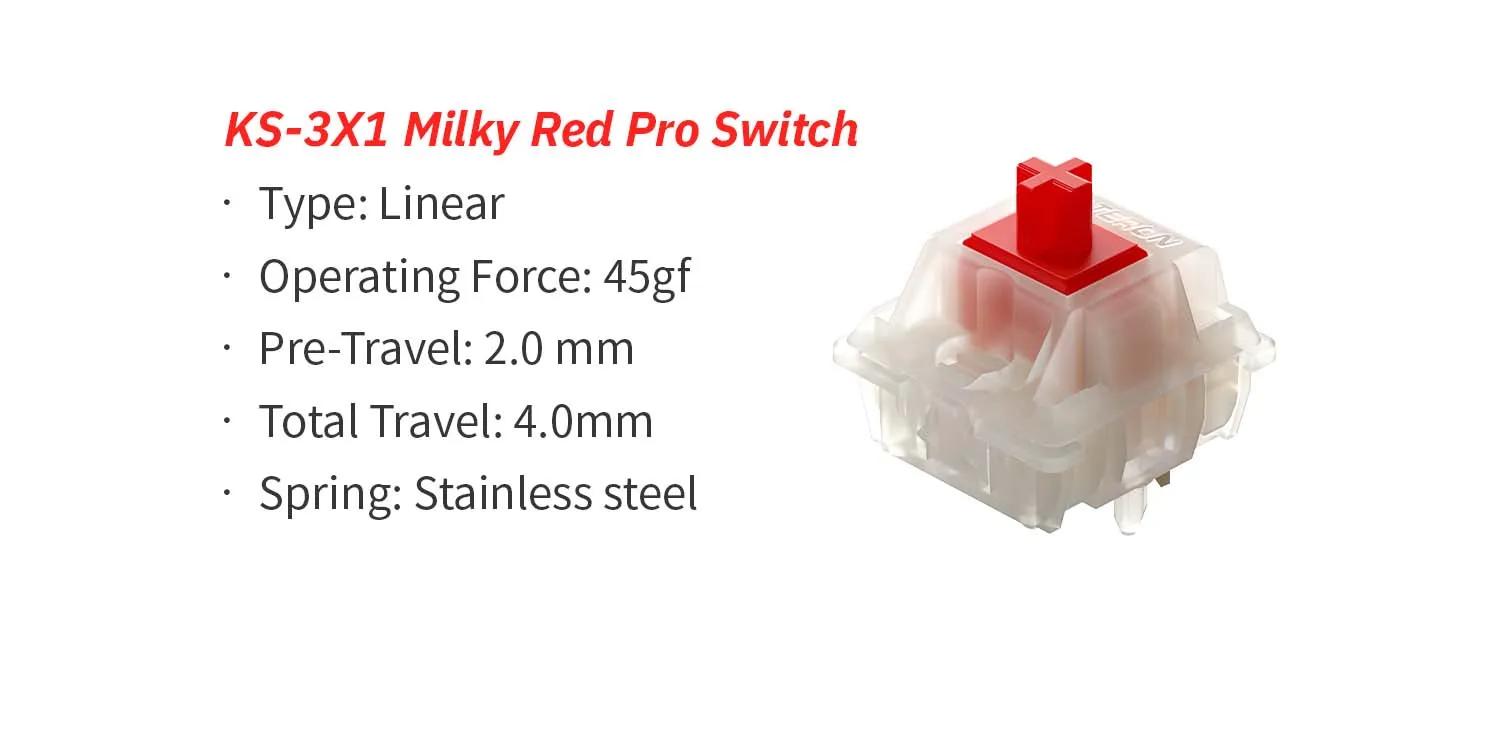
Comparing Milky Red Pro and Milky Yellow Pro
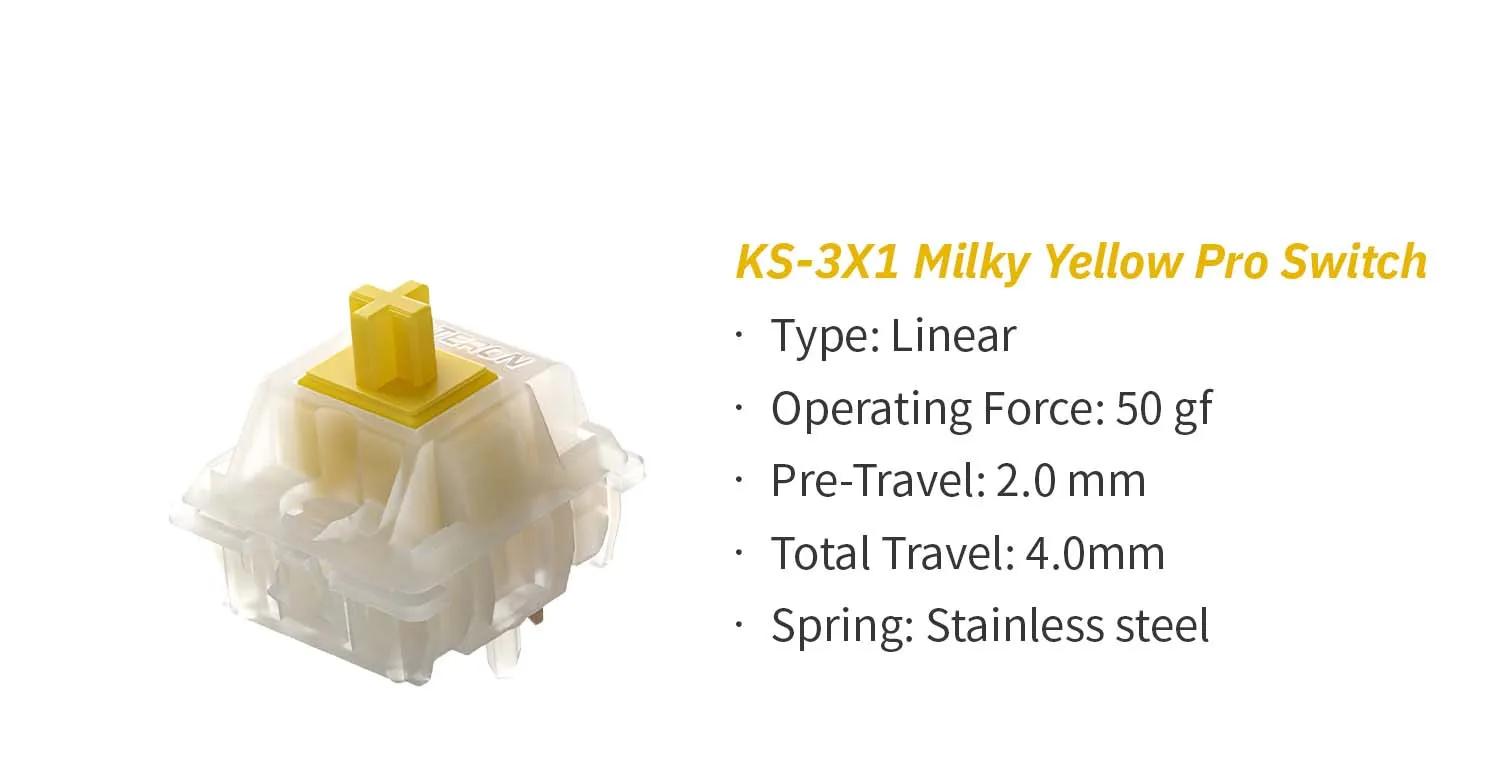
The KS-3X1 Milky Yellow Red Pro Switch Set provides two spring options with the same housing and stem materials.
|
Feature
|
Milky Red Pro
|
Milky Yellow Pro
|
|
Operating Force
|
45±15 gf
|
50±15 gf
|
|
Pre-travel
|
2.0±0.6 mm
|
2.0±0.6 mm
|
|
Total Travel
|
4.0 mm
|
4.0 mm
|
|
Housing Material
|
Milky Nylon
|
Milky Nylon
|
|
Stem Material
|
POM
|
POM
|
|
Mount Type
|
5-pin MX style
|
5-pin MX style
|
|
Factory Lubrication
|
Yes
|
Yes
|
The main difference comes from spring weight.
- Milky Red Pro: A lighter operating force provides a softer and quicker typing response.
- Milky Yellow Pro: The use of a spring with increased weight provides increased control over each keystroke and an improved typing experience with better keystroke bottoming-out.
Both options maintain the same lighting characteristics and overall sound direction, allowing users to choose based on typing preference.
Creating a Consistent Desk Aesthetic
A switch pack is not only a performance component—it is also part of keyboard customization.
Using a milky housing switch set allows you to create:
1. A Cohesive RGB Aesthetic
The diffused housing softens the lighting and blends the RGB colors into an even color gradient so it works well with soft white, pastels, or RGB colors that are in varying stages of a color gradient.
2. An Enhanced Acoustic Environment
The combination of nylon housing, POM stem, and factory lubrication gives a smooth and slightly dampened sound that works in both the home and office acoustical environments.
A Stronger Typing Matrix
The 5-pin MX-style housing allows for greater positioning support and therefore more stability on compatible PCBs.
Things to Think About Before Purchasing a Switch Pack
Some things to consider when purchasing a Normal Profile Keyboard Switch Pack include:
- PCB Compatibility: Ensure that the keyboard accommodates MX-style mechanical switches and the compatible mounting configuration.
- Keycap Compatibility: Keycaps that are thicker and opaque will reduce the effects of RGB lighting, whereas legends that are thinner and more transparent will allow for greater diffusion of RGB.
- Quantity of Switch Pack: Smaller switch packs are great for testing and can be useful before buying a large switch pack to fill a keyboard.
- Personal Preference: The sound and feel of a switch will be defined by the rest of the keyboard and is not solely attributed to the switch.
Closing Thoughts
A Normal Profile Keyboard Switch Pack is an easy way to customize both the visual and acoustic sides of a mechanical keyboard based on preference.
Milky nylon housing, POM stems, and factory lubrication provide a smooth keystroke and an acoustic balance of dampened sound and a keystroke that many users find satisfying.
Instead of focusing on just one performance characteristic, this switch pack is a solution that the user can rely on to bring an element of performance to a product in an otherwise aesthetic-focused design.
FAQs
Q1. What materials comprise the KS-3X1 Milky Pro switches?
KS-3X1 Milky Pro switches utilize a stem and housing constructed from POM and milky nylon, respectively.
Q2. What are the benefits of a milky switch housing?
Milky switch housing provides diffused RGB lighting with an even soft glow.
Q3. Are GATERON KS-3X1 Milky Pro switches pre-lubed? If so, how?
GATERON KS-3X1 Milky Pro switches come pre-lubed from the factory.
Q4. What is the difference between Milky Red Pro and Milky Yellow Pro?
The primary difference is in the spring. Red Pro springs are lighter, and Yellow Pro springs are heavier.
Q5. Are these switches ok to use with hot-swappable keyboards?
These switches are ok to use with MX-style hot-swappable keyboards, but expect to verify PCB compatibility first.



