Low Profile Silent Linear Switches are no longer a niche choice for a small group of keyboard enthusiasts. In 2026, they sit at the intersection of three clear market needs: thinner keyboard structures, lower acoustic output, and a smoother, more controlled keypress. Users now want compact keyboards that feel refined, not compromised.
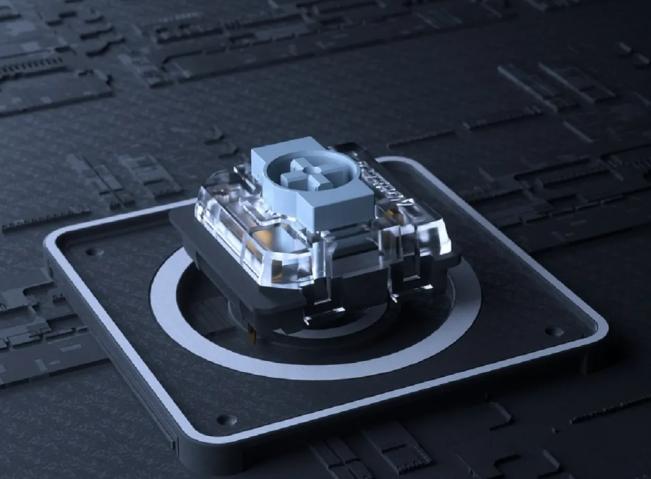
Why Low Profile Silent Linear Switches Matter in 2026
From GATERON's perspective, demand for Low Profile Silent Linear Switches is growing because users increasingly expect one keyboard to serve several environments at once. A board may need to work in an office during the day, in a studio in the evening, and in a gaming setup at night. In that setting, sound control becomes a functional requirement rather than a secondary preference.
Low-profile architecture also supports a different ergonomic and spatial logic. A thinner keyboard profile can reduce the visual and physical bulk of the desk setup. For many users, that translates into a cleaner posture transition from laptop to external keyboard, and a more streamlined working environment. At the same time, linear motion remains attractive because it avoids tactile interruption and preserves a direct, consistent travel path. GATERON's official low-profile materials position this category around slim design, faster actuation, consistent feel, and reduced finger fatigue.
What the Damping Mechanism Actually Changes
Many buyers assume silence is only about making a switch quieter. In practice, damping changes the entire sensory profile of the keypress. In Low Profile Silent Linear Switches, the damping mechanism affects bottom-out impact, upstroke behavior, perceived stiffness, and rebound character. It is not simply "less noise. " It is a different mechanical experience.
When damping is engineered well, the switch can maintain a clean linear path while softening the sharp contact points that usually create higher-pitched or harder acoustic feedback. This matters because low-profile products already operate within a tighter structural envelope. Every design adjustment has a stronger effect on feel. If damping is too aggressive, the switch may feel vague or overly cushioned. If it is too light, the sound reduction may not justify the design. The real target is balance: a controlled descent, a restrained acoustic signature, and a return motion that still feels precise.
At GATERON, this is why silent switch design should be understood as a structural tuning task. The goal is not to erase feedback entirely. The goal is to manage impact energy so the switch remains stable, fast, and usable over long typing sessions.
How Feel Is Built Inside a Low-Profile Structure
The feel of Low Profile Silent Linear Switches is shaped by more than one part. It comes from the interaction between housing geometry, stem path, travel distance, lubrication strategy, and the damping elements themselves. This is also why two silent linear switches can sound similarly quiet but feel very different in use.
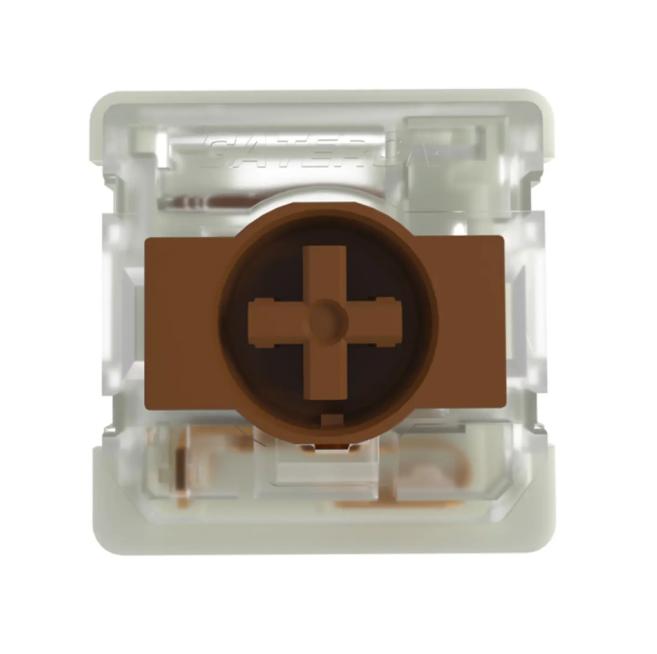
GATERON's official content on the KS-33 Low Profile 2.0 family emphasizes that these switches are designed for ultra-thin keyboards built around the GATERON low-profile standard, rather than as a universal replacement for every low-profile board. That design focus matters for buyers. Compatibility, fit, and reliability are all part of the tactile result. GATERON also notes that the KS-33 Low Profile 2.0 platform uses a purpose-built low-profile structure, while its acoustic-performance materials describe the series as featuring high construction quality, pre-lubricated smooth stems, and optimized sound behavior.
A practical way to understand the build logic is this:
✓ The stem path influences smoothness and consistency during travel.
✓ The damping points reduce harsh impact at bottom-out and release.
✓ Pre-lubrication and surface finish help limit scratchiness and unwanted friction noise.
✓ The low-profile housing format keeps the switch compact while changing leverage and perceived response.
These elements must work together. Silence without structure often feels dull. Speed without damping often sounds too sharp for shared environments.
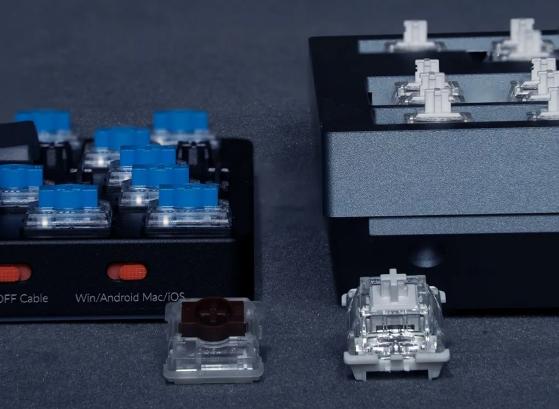
Product Insight From GATERON's Low-Profile Portfolio
For clients evaluating sourcing or product planning, it is useful to look at how the category is segmented. GATERON's official low-profile series includes multiple options, such as the KS-33 Low Profile Silent 2.0 Mechanical Switch Set, the KS-33 Low Profile Red Silent 2.0 Mechanical Switch Set, and other low-profile tactile, clicky, and linear variants within the same broader platform. This shows that silent low-profile design is not a single isolated product idea. It is a maturing product family with differentiated use cases.
That matters commercially. Buyers do not always need the loudest or most expressive switch. In many cases, they need a product that supports:
✓ Open-office deployment
✓ Compact keyboard development
✓ Premium portable keyboard projects
✓ Quieter custom builds for mixed work-and-play use
GATERON's own descriptions of low-profile linear switches also highlight fast typing potential, minimal actuation force, ultra-thin structure, and suitability for quieter environments. Those are not abstract marketing claims. They map directly to the real decision criteria of brands, keyboard assemblers, and end users who want performance without excess noise.
What Clients Should Evaluate Before Selecting Low Profile Silent Linear Switches
A professional buyer should not choose Low Profile Silent Linear Switches based on silence alone. The stronger approach is to evaluate the complete operating profile of the switch in its intended keyboard environment.
First, confirm platform compatibility. GATERON explicitly notes that its KS-33 Low Profile 2.0 design is optimized for keyboards built around the GATERON low-profile standard. That means fit should be checked early in the sourcing process. Second, evaluate whether the damping character supports the intended brand position. Some projects need a softer, more discreet feel. Others need a cleaner and more responsive rebound. Third, assess consistency across batches, because a silent switch only succeeds when the controlled feel can be reproduced at scale.
Clients should also ask a more strategic question: what kind of typing identity should the final keyboard communicate? In 2026, the answer is increasingly tied to refinement. Users still care about speed and smoothness, but they also care about acoustic discipline, desk aesthetics, and long-session comfort. That is exactly why the silent low-profile segment has become more relevant.
A More Refined Direction for Keyboard Design
In GATERON's view, Low Profile Silent Linear Switches mark a more advanced phase in keyboard switch development. They answer a modern requirement: users want a keyboard that feels deliberate, sounds controlled, and fits into thinner product designs without sacrificing usability. The damping mechanism is central to that outcome because it shapes not only noise, but perceived quality.
For brands, distributors, and product developers, this creates a meaningful opportunity. A well-specified low-profile silent switch can support premium positioning in office keyboards, custom low-profile builds, and hybrid-use devices where sound behavior matters as much as actuation performance.
If your team is evaluating the next generation of slim keyboard products, this is the right time to study how damping, structure, and feel work together. Explore GATERON's low-profile switch portfolio and compare the silent variants within a real application context before finalizing your next project direction.



