For mechanical keyboard enthusiasts, sound is a key part of the typing experience. Beyond switch feel and performance, the acoustic character of a switch can define the personality of an entire keyboard build.

Among different switch types, lightweight linear switches have become increasingly popular for their smooth keystrokes, low operating force, and wide acoustic range. Depending on materials, construction, and keyboard setup, they can produce anything from a deep "thock" to a sharper "clack."
This article explains how the sound profile of lightweight linear switches is created and how design elements—using the GATERON Smoothie Linear Switch Set as an example—shape the final acoustic experience.
What Are Lightweight Linear Switches?
Lightweight linear switches can be characterized by having low spring force, smooth keypress travel, and consistent keypress behavior.
1. Lower operating force:
Typically, linear switches are equipped with springs of 35–45gf. These provide a much easier to press switch, encouraging and facilitating longer types without fatigue.
2. Smooth, linear movement:
Linear switches are characterized by neither bumps or click producing mechanisms, as opposed to tactile and clicky switches. Linear switches do produce a sound as the stem interacts with the housing at travel extremes, but this is the extent of the sound formed during keypress.
3. Consistent force curve:
Lightweight springs further enhance the effects of the materials and construction of the keyboard on the user's typing experience, making the experience significantly more customizable.
How a Linear Switch Creates Sound
There are a few key sound signature components of a linear switch.
- Bottom-out impact:
The two most recognized sounds a switch makes are the thock and the clack. Clack sound is produced when the bottom of the switch housing is hit by the switch stem.
- Top-out impact:
The switch produces a secondary impact sound when the key returns and the stem contacts the upper housing. Lightweight springs due to low resistance and fast rebounds produce a more noticeable return impact.
- Spring resonance:
A spring can produce a subtle pinging sound if it is not sufficiently dampened or controlled.
- Internal friction:
The intended sound signature of the switch becomes more noticeable when scratch sounds are eliminated and movement is made smooth.
When sounds exit the switch, keycaps, plates, cases, mounting systems, and the surrounding environment additionally shape the resulting sounds.
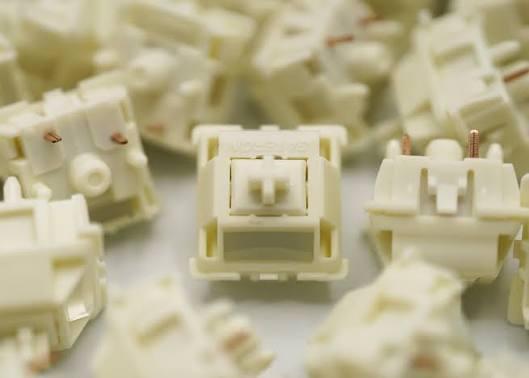
The Differences between Thock and Clack
"Thock" and "clack" refer to sound profiles and not absolute definitions in sound measurement.
|
Characteristic
|
Thock
|
Clack
|
|
Sound Impression
|
Deep, rounded, muted
|
Bright, sharp, and energetic
|
|
Frequency Tendencies
|
Low-mid frequencies
|
Shifts to mid and high frequencies
|
|
Typical Examples
|
Softer and thicker components
|
Harder and thinner components
|
|
Typing Feel
|
Smooth and cushioned
|
Crisp
|
Typically, thock sounds are associated with softer materials and thicker key components; along with the use of structures that are built to absorb sound and/or vibrations.
Typically, clack sounds are associated with the use of thinner components, along with the use of harder materials.
Switches designed with a focus on thock will usually use softer and thicker components, and structures designed to absorb sound and/or vibrations.
Many modern switches are designed in the middle of the thock and clack sounds to achieve a somewhat crisp, but not overly bright, sound.
How Design Shapes Sound
GATERON Smoothie Linear Switch
The acoustic profile of the GATERON Smoothie Linear Switch Set can showcase the effects of internal design and material choices.
1. Infused Full POM
Compared with a polycarbonate switch, POM as a switch housing material yields a more balanced acoustic profile.
2. Stem Design
The addition of a long-pole stem design reduces the bottom out distance and concentrate the impact to produce a more defined sound.
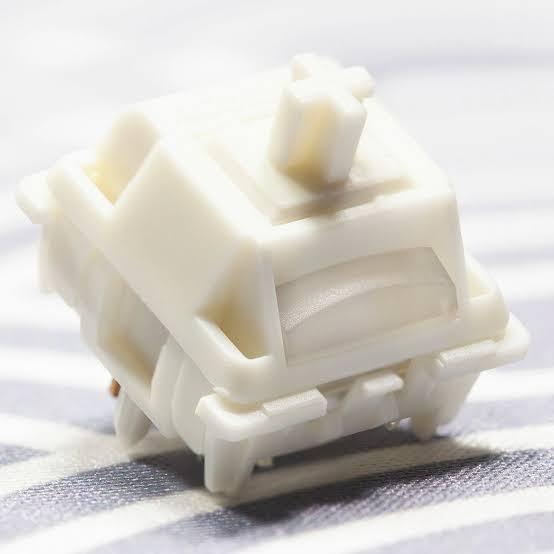
3. Spring Design
The design of the spring provides a cushioned sound and maintains a sharp return.
4. Factory Lubrication
Application of pre-lubrication along the stem and spring minimizes both friction and the noise produced by the spring. Therefore, the acoustic properties of the switch material are more clearly audible.
5. 5-Pin PCB Mounting and LED Compatibility
The configurable 5-pin design aids the stability of the switch on the applicable PCBs. Furthermore, the removable light guide allows the integration of SMD LEDs while preserving the core sound performance of the switch.
Generally, the Smoothie Linear Switch exhibits a well-balanced sound profile with a restrained bottom-out, a mild resonance, and a reduction in high-frequency sound.
External Factors That Affect Switch Sound
Even switches of the same design can differ in sound based on your choice of keyboard.
- Keycap material:
PBT and ABS differ in sound based on how the material vibrates. PBT tends to absorb sound and lead to a deeper, lower sound. ABS usually results in a shaper, higher sound.
- Mounting structure:
Gasket-mounted keyboards provide a more flexible structure and therefore a more muffled sound than a rigid structure, which results in a more precise and direct sound.
- Lubrication and tuning:
Lubrication and the use of films can alter the sound of a switch and structure the vibrations that a switch produces.
- Desk environment:
The sound a switch produces can be affected by the surface your keyboard is placed on. Different materials reflect or absorb sound waves of different frequencies.
Finding Your Ideal Sound Profile
The "best" mechanical switch sound is subjective. Some users prefer a deeper and more muted sound, referred to as thock, while others prefer a sharper and more noticeable sound, referred to as clack.
The use of a lightweight linear switch as a base provides the most design freedom for a sound profile of your choice. For example, the design of the GATERON Smoothie Linear Switch is meant to prioritize both a more pleasant experience and a more pronounced sound.
In the end, the sound a switch produces is the combination of the switch and the other components of the keyboard.
FAQs
Q1. Are POM switches thicker than polycarbonate switches?
POM switches generally have a deeper and softer sound than polycarbonate switches. Polycarbonate switches are brighter in comparison.
Q2. Are lightweight linear switches comfortable for long typing sessions?
Yes. Lightweight linear switches have a lower actuation force which can mitigate finger fatigue and result in a smoother overall experience.
Q3. Are lightweight linear switches thocky or clacky?
It depends on a variety of factors such as which materials are used, what type of keycaps are used, lubrication, and construction of the keyboard itself.
Q4. What makes a linear switch sound thocky?
The combination of soft housings, thicker keycaps, and designs that are meant to dampen vibrations typically lead to a thock sound.
Q5. How does the GATERON Smoothie switch sound?
GATERON Smoothie gives a sound profile that is balanced. The bottoming out is more controlled and there is a reduction in high frequency sharpness.



