In the gaming and high-performance computing sectors, Hall effect keyboards are the new standard. But what is it about the magnetic switch keyboards that give the high responsiveness and durability that a lot of buyers are looking for?
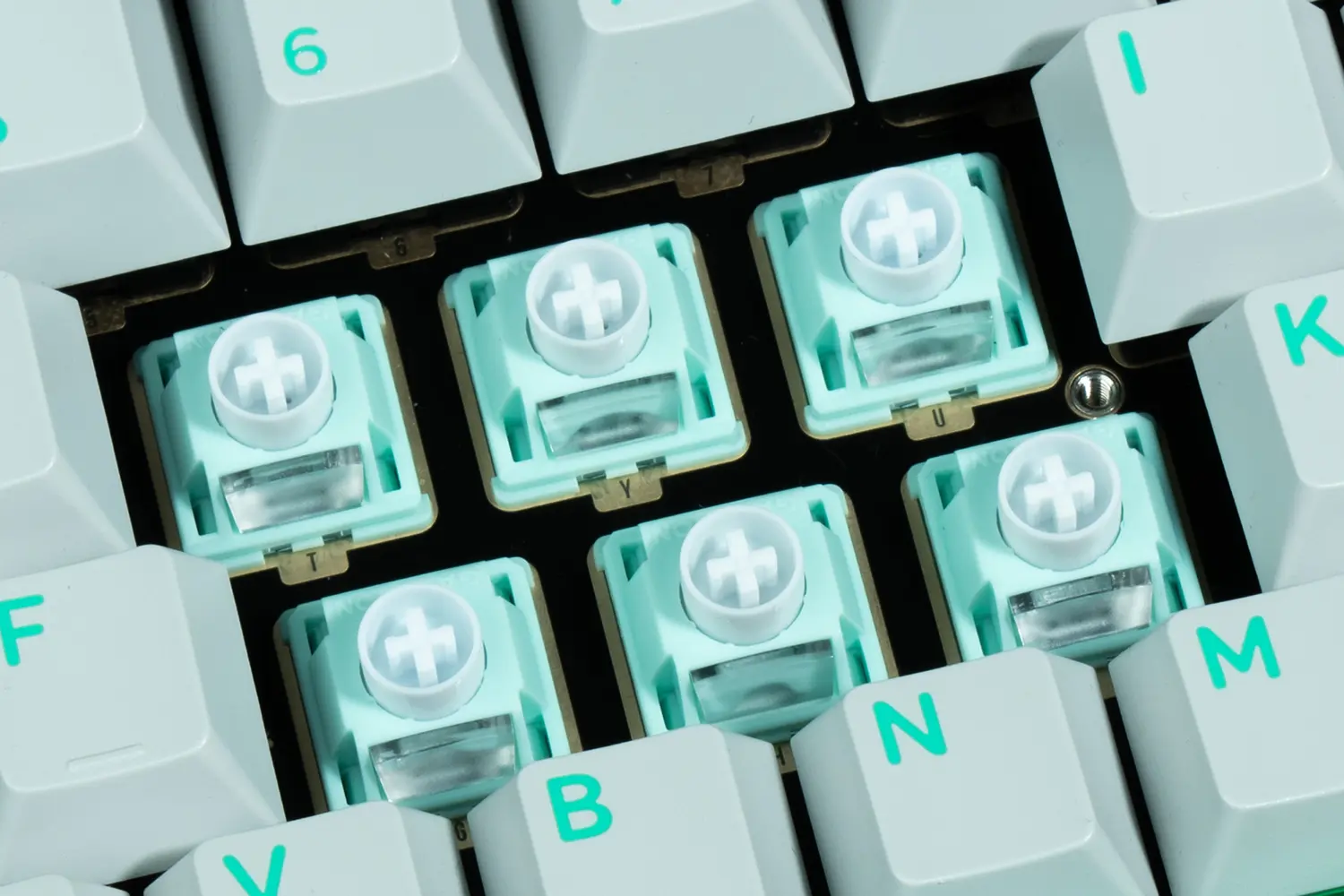
Magnetic switches, or Hall effect switches, do not use standard metal contact points. Instead, they use magnetic fields and hall effect sensors, which completely alter what a keyboard can do for a gamer or professional.
Why is Hall Effect Technology Different?
The magnetic switches respond based on a phenomenon that involves a moving magnet that is located near a Hall effect sensor (one of the keyboard PCB components). This results in a change in voltage, which allows the keyboard to sense the movement of that key. Every key has its own magnet, and when the key is pressed, the magnet is moved to a different position that is close to the Hall sensor.
This is how the keyboard can detect the speed as well as the total distance that a key has been pressed. Mechanical switches are subject to friction, oxidation, and spring fatigue, which leads to their degradation over time, but magnetic switches have no contact and therefore eliminate these issues.
The process of keystroke registration and actuation is vastly improved with Hall Effect switches. Mechanical switches are either in an on or off state, but Hall Effect switches are able to detect a value in between these states, which means that features such as adjustable actuation points and Rapid Trigger are now available.
Core Advantage 1: Software-Defined Actuation for Ultimate Customization
Despite other switches offering an actuation range of about 2mm, magnetic switches do not have this limitation.
- Per-key actuation tuning: Users can set the actuation point of each key anywhere between 0.1mm and 4.0mm in 0.1mm increments. You could set the WASD keys to actuation points of 0.1mm, to make them feel very responsive, while keeping the other keys at, say, 3.0mm, to make them feel less likely to be pressed accidentally.
- Rapid Trigger technology: Because magnetic switches are always aware of the position of each key, they can do something called Rapid Trigger. This means that one key can be registered as pressed the moment the key is pressed down, and that same key is able to be registered as unpressed the moment the key is released. This technology is very useful in competitive gaming because it allows the player to press and release keys in very quick succession, as the key does not have to be manually released to be pressed again, and it allows for very quick counter-strafing.
- Analogue input capabilities: Magnetic switches can differentiate a full press versus a partial press, unlike other types of switches. As a result, one key can be pressed in different ways to perform different functions. For example, a light press could cause the player to sprint, while a full press could cause the player to jump. This provides players with extra customization that could only be achieved with gaming controllers.
- Dynamic Key Stroke (DKS): Advanced Hall Effect implementations support assigning up to four different actions to a single key based on travel depth and press duration, dramatically reducing the number of keys needed for complex command sequences.
Core Advantage 2: Unmatched Durability and Near-Zero Latency
The absence of physical contact points is the primary reason magnetic switches deliver industry-leading reliability.
- Longer Life Cycle: Hall Effect Switches guarantee a lifetime span of 100 million keystrokes (per switch), while premium mechanical switches (which are considered high-end), max out at ultimately 50–70 million keystrokes. Also, wear and tear of metal contacts does not exist, so magnetic switches, even after sustained daily use, will give the same actuation experience.
- No Debounce Delays: Magnetic switches operate, while mechanical switches use a certain time (depending on the switch) (5–15ms) to debounce the chatter signals from their metal contacts. Because there is no bounce, Magnetic switches are activated in microseconds. Leading Hall Effect Boards have achieved a real-world latency of 0.93ms, not just in theory.
- Non-Corrodible: The Hall Effect Sensors are sealed, and so are immune to issues like dust, water, metal dust, etc. This makes magnetic keyboards a more feasible option when talking about fields or places with high moisture, like warehouses, and so on.
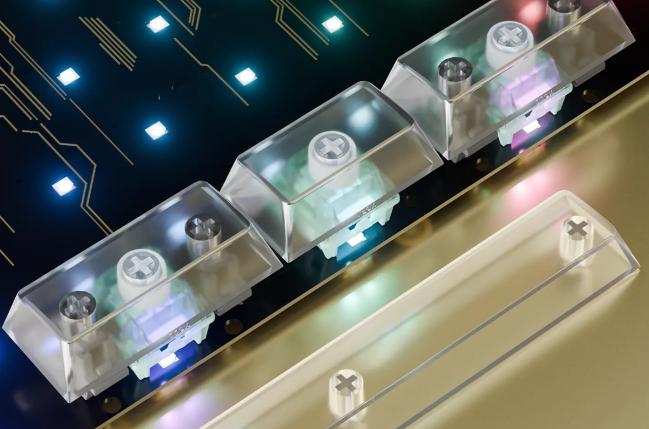
Magnetic vs Mechanical
- Method of Actuation: In mechanical switches, there is the completion of a circuit through metal contacts, whilst in magnetic switches, there is a completion of magnetic field detection, with absolutely no contact.
- Variable Actuation: mechanical has a fixed, unchangeable actuation point. In contrast, magnetic switches allow users to fully customize their actuation points via software..
- End of Life Cycle rating: mechanical switches end at 50–70 million keystrokes, whereas magnetic switches do more than 100 million keystrokes
- No Debounce: mechanical switches can NEVER operate simultaneously because of a certain time (depending on the switch) of 5–15ms. Magnetic switches operate, while mechanical switches use a certain time (depending on the switch) (5–15ms) to debounce the chatter signals from their metal contacts. Because there is no bounce, Magnetic switches are activated in microseconds. Leading Hall Effect Keyboards in the real world, no theory reached 0.93ms latency.
- Environmental Protection: Mechanical switches are susceptible to dust and corrosion, while magnetic switches are sealed, contactless, and thus environmentally
- Switches are either mechanical, which are binary ON/ OFF switches, or magnetic, which are analogue switches.
- Tactile options: Mechanical switches offer extensive tactile and clicky variants; magnetic switches are predominantly linear but are rapidly expanding into tactile and low-profile form factors.
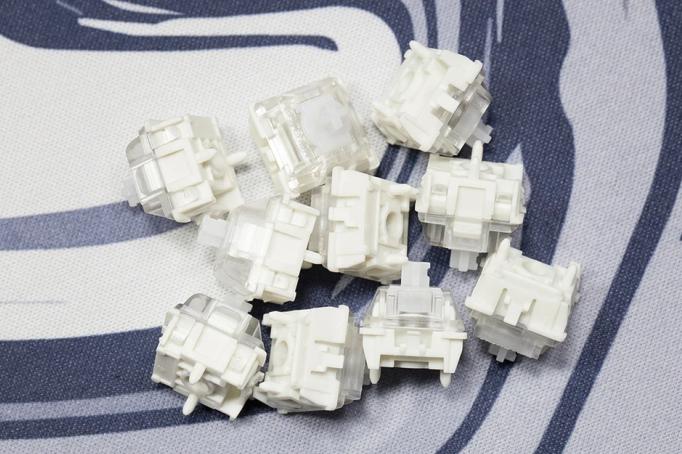
Real-World Performance Data
Gateron’s fourth‑generation Hall‑effect sensors are pushing the boundaries of what magnetic switches can deliver:
- 150‑million keystroke lifespan: The Gateron KS‑37B Magnetic Hall Sensor Keyboard Switch is rated for 150 million keystrokes — a full 50% longer than the 100M ratings common in the industry.
- Sub‑0.08ms latency for esports: For latency‑sensitive applications, the Gateron GT60 PROPCB achieves esports‑grade latency as low as 0.07–0.08ms, an improvement of roughly 25% over competing 0.125ms implementations.
- 10× faster than mechanical switches: The Gateron KS‑20 Magnetic Orange Switch uses patented Hall‑effect induction to operate at speeds up to 10× faster than standard mechanical switches, with factory pre‑lubrication and a freely adjustable actuation point from 0.4mm to 3.6mm.
- 8,000Hz polling with 0.05mm Rapid Trigger: For high‑polling‑rate setups, keyboards equipped with Gateron Magnetic Jade Pro switches routinely support 8,000Hz polling rates—corresponding to a theoretical 0.125ms response time—with 0.05mm Rapid Trigger accuracy and adjustable actuation from 0.1mm to 3.5mm in 0.1mm increments.
The data makes Gateron's magnetic switches the most responsive and the most durable.
Other Uses Besides Gaming
So far, magnetic keyboards have gained traction in the gaming industry, but their technical merits are applicable in many other fields. For instance, in industrial control systems, the contactless design, which eliminates failure from moisture, chemicals, or mechanical wear, means dependable control in tough situations.
Actuated switches are also beneficial for programmers and data experts because they can make their typing profiles no to less than suit typing fatigue for long hours of coding. In high-frequency trading, where any input lag could cost the trade, a less than 1ms response time makes a lot of sense.
Conclusion on Value for Money
Magnetic switches represent a good value for money because other than an initial high purchase price, the 100 million keystroke lifespan of Gateron’s magnetic switches translates to fewer warranty claims and replacements. Contactless design eliminates performance degradation, avoiding the “new keyboard feel” loss seen in mechanical switches within months.
With mature Hall Effect lines from Gateron, magnetic switches have become an industry standard. Organizations requiring high‑reliability input devices should prioritize Hall Effect keyboards where uptime, consistency, and low latency are critical. The technology is proven, and the performance advantage over traditional switches is now measurable.



