Modern gaming keyboards tend to be thinner, lighter, and more portable, yet retain mechanical performance. Fast response times and portable designs with enhanced feedback have led to the development of the 3 Pin Low Profile Switches.
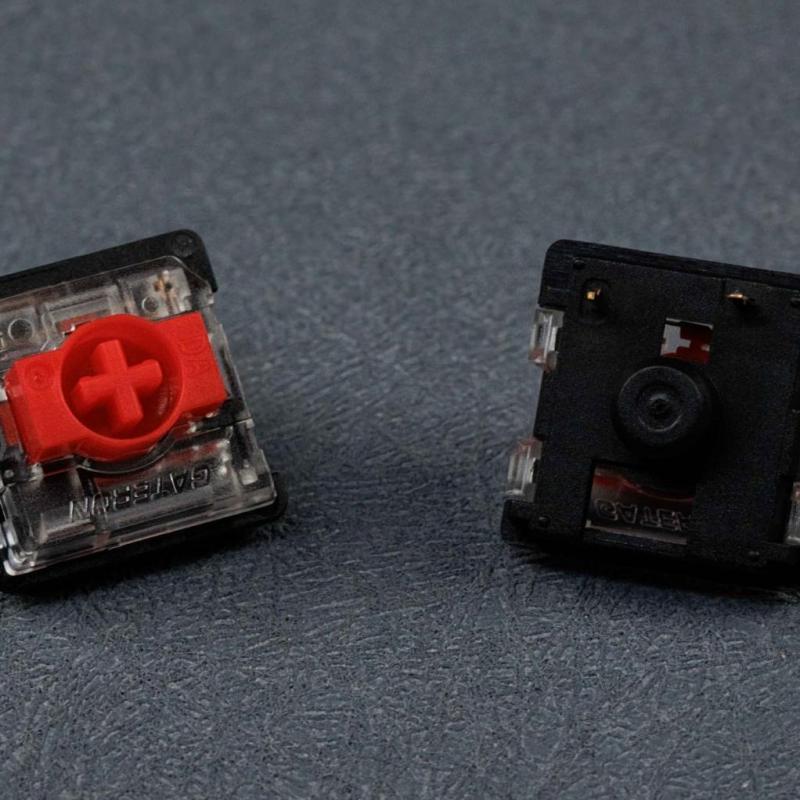
Low profile switches do not just involve downsizing. They require a complete redesign of internal structures (stems, housings, springs, and mounts). To fit the compact designs, Gateron is using a balance of performance, durability, and user experience.
Design of Low Profile Switches with 3 Pins
The mount and stability of the pin structure from the mechanical switch is connected to the keyboard's PCB. A positioning pin is plastic, and the other two are metal. The Low Profile Switch is designed with compact structures which help with the overall height of the keyboard and with the optimization of the mechanism.
Manufacturers have the ability to design and improve the mechanism of the switches by getting rid of any unnecessary space. This can create a height that is less than what traditional switches are while still maintaining the same mechanical characteristics.
Gateron's Low Profile Switch Design
As a company that has focused on switches, Gateron has developed a great deal of experience with a variety of designs, materials, and mechanical switches.
A challenge faced during the development of low profile switches is achieving reduced size while simultaneously retaining a stable and predictable key feel at a smaller mechanical travel range. Restrictions on internal dimensions lead to a range of issues including a more muted bottom-out feedback and a general decline in the consistency of the typing experience.
The GATERON KS-33 Low Profile 2.0 Mechanical Switch employs structural innovations that cater to the specific challenges of ultra-slim keyboards.
KS-33 Low Profile 2.0: Better Stability with Structural Enhancements
The KS-33 Low Profile 2.0 has a structure that is 12.2 mm in size. It has compactness for small mechanical keyboards. The internals have been modified primarily to improve the guidance for the stems and to ensure that the consistency of bottoming out is maintained.
The main structural modifications are:
1. Design of the side poles optimized
The side poles have been shifted by 0.3 mm to improve guidance of the stem in movement and to establish a better stable key press.
2. Design of the mid poles extended
The mid poles have been extended by 0.3 mm to provide improved bottom out feedback and consistency for bottom out during fast keystrokes.
While these changes may seem small, it must be remembered that low profile switches have a small margin of travel, and as such, small structural changes can have a large impact on the switch.
This switch integrates:
- POM for better stem movement
- Top PC housing for no interference with RGB
- Housing nylon to provide cushioning and improve sound
Material choice plays a large role in the switch, and combining these materials helps balance smoothness and durability with sound.
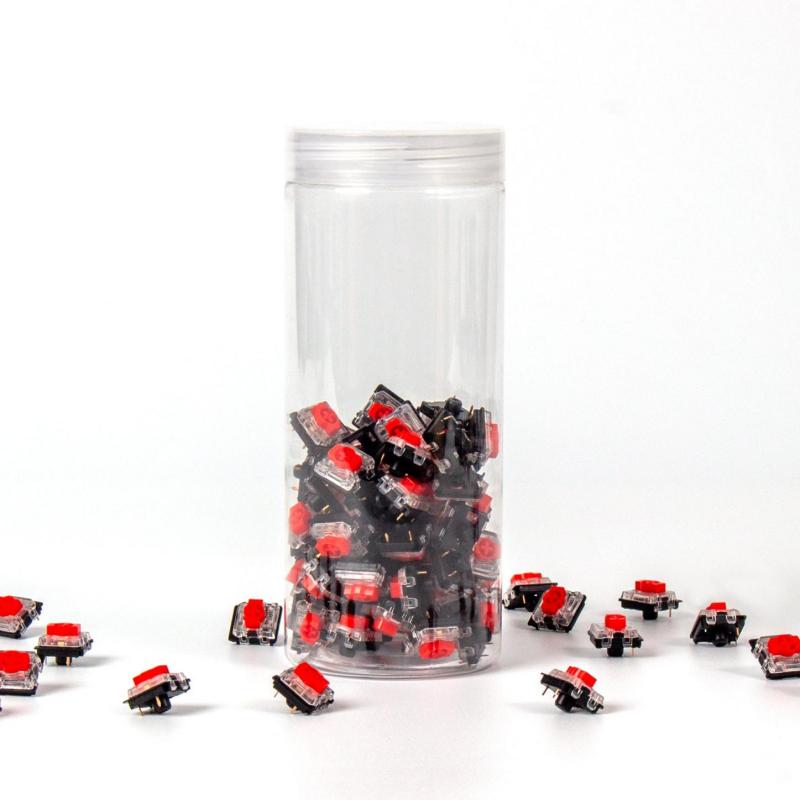
Performance of the KS-33 Variants
Generally, low profile switches can be characterized by a short total travel. However, the overall user experience is determined by the relationship of the operating force, actuation point, and the type of feedback.
|
Variant
|
Type
|
Operating Force
|
Travel Distance
|
Total Travel Distance
|
Spring Length
|
|
Red
|
Linear
|
50±15 gf
|
1.7±0.4 mm
|
3.2±0.2 mm
|
13.5 mm
|
|
Brown
|
Tactile
|
55±15 gf
|
1.7±0.4 mm
|
3.2±0.2 mm
|
13.5 mm
|
|
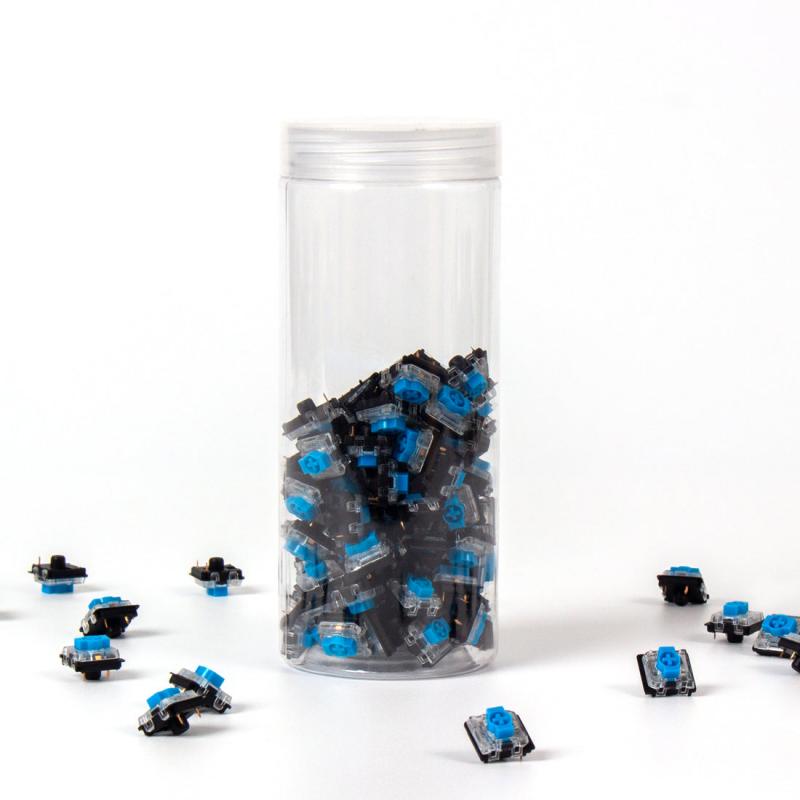
Blue
|
Clicky
|
65±15 gf
|
1.7±0.4 mm
|
3.2±0.2 mm
|
11.5 mm
|
A linear switch that is unencumbered in its travel, it can be used for gaming that requires many key presses.
Provides tactually discernable switch actuation that provides a sound and feedback middle ground for both gamers and typists.
Provides stronger tactual feedback and click sound making this switch most suitable for mechanical switch traditionalists.
Durability & Factory Lubrication Advantages
The KS-33 Low Profile 2.0 is capable of 60 million keystrokes which makes it an ideal switch for both gaming and productivity applications.
Another feature is factory lubrication. The application of lubrication decreases the friction that the moving parts experience, which diminishes the scratchy consistency and the noise of springs having to be broken in. It also improves the consistency of keystrokes.
SMD LEDs permitting RGB and other light effects can be embedded within the transparent housing.
Low Profile Switches for New Age Gaming
3 Pin Low Profile Switches can only be used with keyboards designed for low profile switches. Because low profile switches can vary between designs, they are not a replacement for standard mechanical keyboard switches.
When used in the right keyboard, Low Profile Switches can provide:
- A decrease in overall keyboard height
- Shorter travel distance of keystroke
- A responsive feedback of a mechanical switch
Gaming keyboards designed with low profile mechanical switches provide a perfect balance of performance and a minimalist design for gamers who travel frequently and prefer portable setups.
The New Age of Compact Mechanical Gaming
The modern compact design of Low Profile Switches is the ideal evolution of fast acting design for switches with a focus on portability. Rather than taking the place of conventional options, they are designed for a new use.
Advancements in construction, materials, and manufacturing methods, such as those used for the GATERON KS-33 Low Profile 2.0, illustrate that compact switches can provide reliable performance while offering the mechanical experience that gamers enjoy.
FAQs
Q1. What are 3 Pin Low Profile Switches?
3 Pin Low Profile Switches are a type of low profile switch designed to take up less space in a keyboard. They have a three-pin mounting structure to help with compact design.
Q2. Are 3 Pin Low Profile Switches good for gaming?
3 Pin Low Profile Switches have a short travel distance which makes them good for responsive gaming.
Q3. What is the difference between low profile and standard mechanical switches?
Low Profile switches take up less vertical space and typically have a smaller travel distance than standard mechanical switches.
Q4. Are 3 Pin Low Profile Switches hot-swappable?
That depends on the keyboard. 3 Pin Low Profile Switches need to be designed for a specific low profile hot-swappable socket.
Q5. How long do GATERON KS-33 Low Profile Switches last?
GATERON KS-33 Low Profile Switches can be used for around 60 million key presses.



